
Bomb Threats Hit Three Schumer Offices as Senate Leadership Pressures Intensify
POLITICS
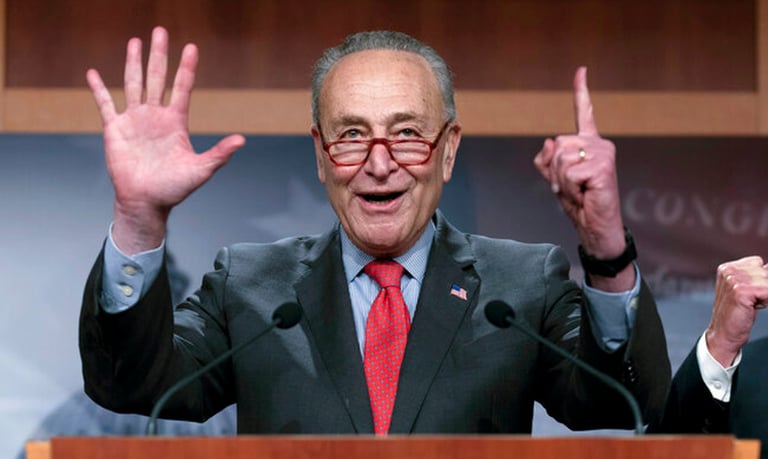
Sen. Chuck Schumer is facing simultaneous crises: a wave of bomb threats across his New York offices and a growing push from inside his own party demanding more aggressive leadership. Here’s how both developments collided this week — and what they could mean for congressional power in 2026.
Senate Majority Leader Chuck Schumer faced a dual pressure campaign this week — one from outside forces, and one from inside his own party.
Local and federal law enforcement responded Monday after three of Schumer’s regional New York offices received bomb-threat emails referencing the “MAGA” movement and false claims that the 2020 election was stolen. Offices in Rochester, Binghamton, and Long Island were swept by police; no devices were found, and staff were evacuated safely. Schumer condemned the threats as “dangerous attacks on public service,” urging renewed attention to the rise in politically motivated intimidation.
The threats landed as Schumer is already under scrutiny from a growing faction within the Democratic caucus. A group of senators — informally nicknamed the “Fight Club” — is applying internal pressure for more confrontational leadership. Members of the group have pushed Schumer to take stronger stances against the Trump administration’s foreign-policy posture and to back more populist candidates ahead of the 2026 midterms.
Critics argue that Schumer’s recent handling of the government shutdown and several close Senate votes exposed weaknesses in party unity. Supporters counter that he has “expanded the map” by recruiting competitive candidates in battleground states, with healthcare positioned as the party’s unifying message.
At the same time, Schumer announced he will introduce a bipartisan war-powers resolution aimed at preventing unilateral U.S. military deployment into Venezuela, responding to reports of possible executive action. The move underscores Schumer’s message that Congress — not the White House — must hold authority over decisions to send American troops abroad.
Whether these internal and external pressures will reshape Democratic strategy remains unclear. But the convergence of bomb threats, foreign-policy disputes, and leadership challenges has thrust Schumer into one of the most volatile political moments of his career.