
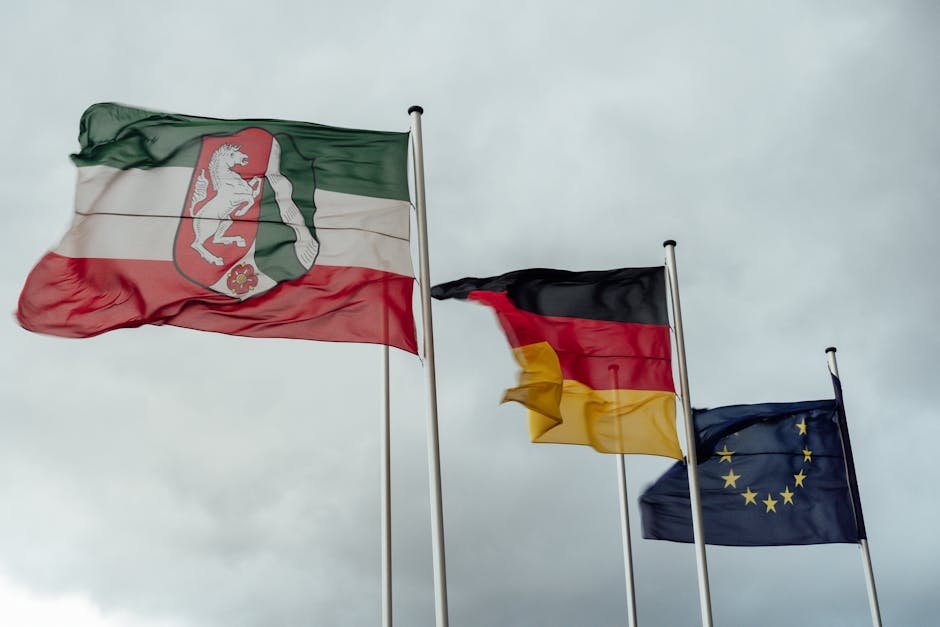
Israel’s deputy foreign minister accused the European Union of weaponizing human rights language to disguise what he called a resurgence of old-world antisemitism, following Brussels’ announcement of new sanctions targeting Israeli settler organizations in the West Bank.
Deputy Foreign Minister Sharren Haskel told reporters the EU’s move represents “the same ancient hatred wearing a socially acceptable mask.” The sanctions freeze assets and ban travel for individuals and groups the EU claims are involved in violence against Palestinians, a characterization Israeli officials reject as one-sided and ignoring Palestinian attacks on Jewish communities.
The timing matters for American interests. The Biden administration has walked a tightrope between supporting Israel’s security—backed by nearly $4 billion in annual U.S. military aid—and appeasing progressive Democrats who push for conditions on that assistance. The EU sanctions create fresh pressure on Washington to follow suit, despite bipartisan congressional support for Israel remaining strong in polling and votes.
Haskel pointed to what she described as a double standard: European nations ignore human rights violations by authoritarian regimes while singling out the Middle East’s only functioning democracy. She noted the EU maintains diplomatic and economic relations with countries that execute dissidents and imprison political opponents, yet applies sanctions to Israelis living in disputed territories with competing historical claims.
The sanctions target groups operating in areas Israel captured in the 1967 Six-Day War, land most Israelis view as the biblical heartland of the Jewish people and most Palestinians claim for a future state. Approximately 500,000 Israelis now live in these communities, which grew significantly during both Republican and Democratic administrations in Washington despite official U.S. opposition to settlement expansion.
For American policymakers, the EU’s aggressive posture complicates efforts to broker any future Israeli-Palestinian agreement. It also signals Europe’s willingness to undercut U.S. leadership in the region at a moment when Iran’s nuclear program advances and Chinese influence grows across the Middle East.
Israeli Prime Minister Benjamin Netanyahu called the sanctions “shameful” and said his government would not bend to European pressure. He announced immediate suspension of several bilateral meetings with EU officials and hinted at economic countermeasures against European companies operating in Israel.
The question now is whether Washington will explicitly distance itself from the EU position or remain silent—a choice that will reverberate through Jewish-American communities, evangelical voters who strongly support Israel, and Arab-American populations concentrated in swing states.
Key Points
- Israeli officials accuse EU of reviving old antisemitism behind human rights rhetoric after sanctions target West Bank settler groups
- Move pressures Biden administration to choose between European allies and bipartisan congressional support for Israel
- Netanyahu suspends diplomatic meetings with EU, signaling broader trans-Atlantic divide that could benefit Chinese and Iranian interests in Middle East
https://www.foxnews.com/world/israeli-official-says-eu-sanctions-reveal-antisemitism-hiding-behind-socially-acceptable-mask – June 03, 2026