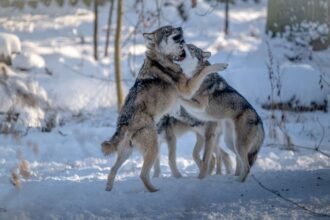

Gray wolves are thriving across the Northern Rockies and Great Lakes, with populations far exceeding recovery goals set three decades ago. But the success story conservationists celebrate has become a crisis for ranchers watching their cattle torn apart in pastures their families have worked for generations.
The numbers tell competing stories. Wildlife advocates point to roughly 3,000 wolves now roaming Montana, Idaho, Wyoming, and Wisconsin—proof that Endangered Species Act protections work. Ranchers counter with livestock kill reports: over 600 cattle and sheep confirmed taken by wolves in the Northern Rockies alone last year, with many more losses going unconfirmed when predation occurs in remote grazing areas.
Federal Compensation Doesn’t Cover Real Costs
State and federal programs reimburse ranchers for confirmed wolf kills, typically paying market value for dead livestock. But cattlemen say that’s just the beginning. Stressed cattle gain weight slower, pregnant cows abort calves, and herds bunch together instead of grazing efficiently. A Montana State University study found wolf presence reduces calf weaning weights by 30-40 pounds even when no kills occur—losses that never trigger compensation.
Then there’s the hours spent riding fence lines, the guard dogs that don’t always work, the nighttime patrols. “They’ll pay me $1,200 for a dead calf,” one Wyoming rancher told agricultural reporters. “They won’t pay me for the three I can’t find or the vet bills for the ones that survived the attack.”
The Delisting Battle and State Management
Montana, Idaho, and Wyoming gained wolf management authority after federal delisting in 2011, allowing regulated hunting seasons to control populations. Environmental groups immediately sued, winning relisting in 2022 when a federal judge ruled states weren’t adequately protecting wolves. That decision eliminated hunting seasons and left ranchers with fewer tools as wolf numbers climbed.
Conservationists argue wolves belong on the landscape and kill less than one-tenth of one percent of regional livestock. They note that disease, weather, and birthing problems cause far more cattle deaths than predators. But ranchers counter that percentages mean little when wolves target the same operations repeatedly, and that urban environmentalists don’t bear the financial burden of restoring an apex predator.
What’s at Stake for Rural Communities
This collision between species recovery and property rights continues escalating. For ranchers operating on thin margins, wolf predation can mean the difference between profit and loss. For conservationists, delisting threatens to undo decades of recovery work. Meanwhile, rural communities watch federal wildlife decisions reshape their livelihoods with limited local input.
Key Points
- Gray wolf populations now exceed recovery goals by three-fold in Northern Rockies
- Ranchers report over 600 confirmed livestock kills yearly, with indirect costs far higher than compensation
- Federal relisting in 2022 eliminated state hunting seasons, leaving fewer predator management tools
Aporia News – October 21, 2026