The Navy just proved it can build combat drones at sea without returning to port — a breakthrough that could reshape how America projects power in the Pacific.
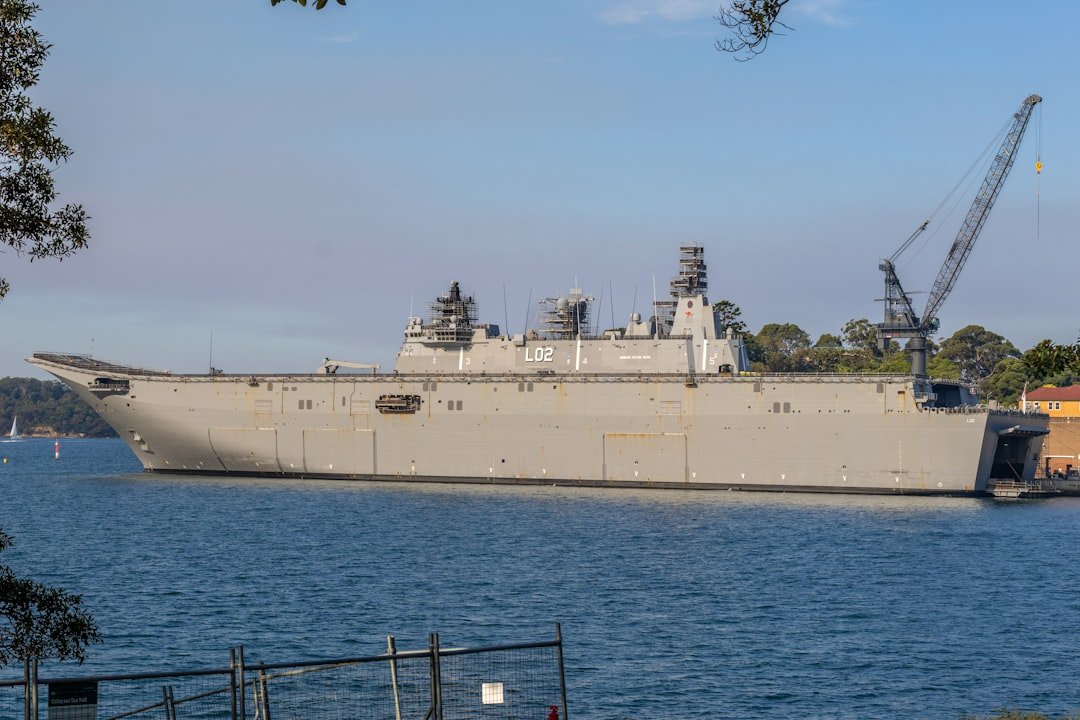
Defense contractor Firestorm Labs manufactured over 1,000 parts and assembled 12 complete drones aboard the USS Essex while the amphibious assault ship operated far from shore. The company used a containerized microfactory with 3D printing technology to produce its Squall first-person view drones entirely at sea during recent operations.
Why Manufacturing at Sea Matters for Naval Power
The demonstration addresses a critical vulnerability in modern naval warfare. Today’s warships carry limited weapons loads and must return to friendly ports when they run low — a process that takes ships out of action for days or weeks. In a prolonged Pacific conflict with China, those resupply delays could prove catastrophic.
The USS Essex experiment changes that calculus. A Wasp-class amphibious assault ship now demonstrated it can replenish its own drone arsenal while remaining on station. The technology could allow American warships to sustain operations indefinitely in contested waters thousands of miles from the nearest U.S. naval base.
The Technology Behind Shipboard Drone Production
Firestorm Labs fitted standard shipping containers with 3D printers and assembly equipment that can operate in the cramped, rolling conditions aboard a warship. The company’s Squall drones use designs optimized for additive manufacturing, meaning they can be printed in sections and quickly assembled by sailors without specialized training.
The Navy has been pushing hard for what it calls “distributed manufacturing” — the ability to produce weapons and spare parts wherever the fleet operates. This successful test aboard the Essex proves the concept works with current technology, not theoretical systems years away from deployment.
What Happens Next for the Fleet
The Essex demonstration occurred during Rim of the Pacific 2026 exercises, the massive multinational naval drill held near Hawaii. The timing signals the Navy wants allies to see this capability as it builds coalitions to counter Chinese naval expansion.
Navy leaders have not announced plans to equip other ships with similar microfactories, but the successful test removes technical doubts. The question now shifts from “can we do this” to “how fast can we deploy it across the fleet.” Every amphibious assault ship and aircraft carrier becomes a potential drone factory that Beijing cannot knock out with a missile strike on a fixed shore facility.
Key Points
- Firestorm Labs produced over 1,000 drone parts and 12 complete Squall drones aboard USS Essex without returning to port
- Containerized microfactory with 3D printing allows warships to replenish drone arsenals while remaining on station in contested waters
- Successful test during Pacific exercises proves Navy can sustain operations indefinitely without vulnerable shore-based resupply lines
https://www.defensenews.com/industry/techwatch/2026/08/05/firestorm-labs-builds-drones-aboard-uss-essex-without-shore-resupply/ – August 06, 2026