
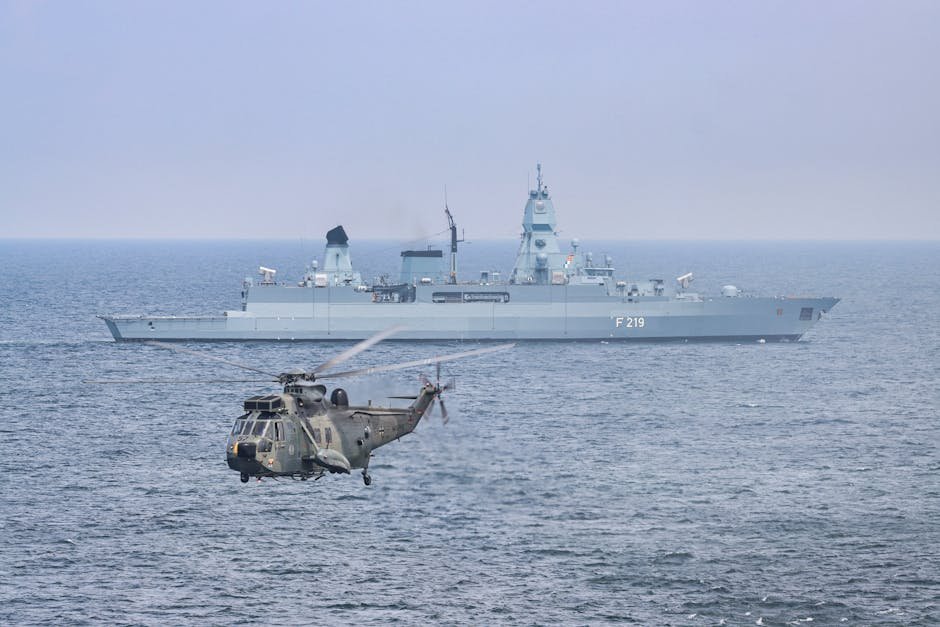
The Pentagon plans to slash the number of strategic bombers and warships it commits to NATO in wartime, according to a report that raises questions about America’s ability to defend Europe while managing threats from China.
The cuts would reduce U.S. military assets available to European allies during a crisis, potentially leaving NATO more vulnerable at a moment when Russia continues its war in Ukraine and European defense spending remains inadequate. Defense sources say the shift reflects hard choices as Washington pivots resources toward the Indo-Pacific theater.
Strategic bombers—including B-1, B-2, and B-52 aircraft capable of long-range strikes deep into enemy territory—form a cornerstone of NATO’s deterrence strategy. Similarly, U.S. Navy warships provide critical firepower and missile defense across the Atlantic and Mediterranean. Both capabilities have reassured European allies since the Cold War that American military might stands ready to counter Russian aggression.
The planned reductions come as the Defense Department faces mounting pressure to prepare for potential conflict with China over Taiwan. Military planners increasingly view the Pacific as the primary theater where American interests face existential challenge. That strategic calculation forces painful tradeoffs: assets sent to deter Beijing cannot simultaneously guard Europe’s eastern flank.
European NATO members have pledged to increase defense spending, but most still fall short of the alliance’s 2% of GDP target. Critics argue that decades of underspending left Europe dependent on American military power while allowing social welfare programs to crowd out defense budgets. The new U.S. posture may force European capitals to finally build the combat power they’ve long promised.
For American families, the stakes cut both ways. Reducing commitments to Europe could mean fewer deployments for servicemembers and more focus on threats closer to U.S. interests in Asia. But it also raises the risk that a weakened NATO invites Russian adventurism—potentially drawing America into exactly the kind of European conflict these cuts aim to avoid.
The timing compounds concerns. Russia’s war in Ukraine grinds on with no clear resolution, while Moscow continues military exercises along NATO borders. A reduced U.S. presence could embolden the Kremlin to test alliance resolve in the Baltics or Poland, where American credibility underpins fragile peace.
Pentagon officials have not publicly detailed the scope of reductions or timelines for implementation. What remains clear: America’s European allies can no longer assume the full weight of U.S. military power will automatically swing their direction when trouble comes.
Key Points
- Pentagon reducing strategic bombers and warships committed to NATO in crisis scenarios
- Shift reflects Defense Department priority on Indo-Pacific theater and China threat
- European allies may face Russian threats with less American military backing than assumed
https://www.defensenews.com/global/europe/2026/05/26/report-us-to-cut-strategic-bombers-and-warships-available-to-nato-in-a-crisis/ – May 26, 2026