
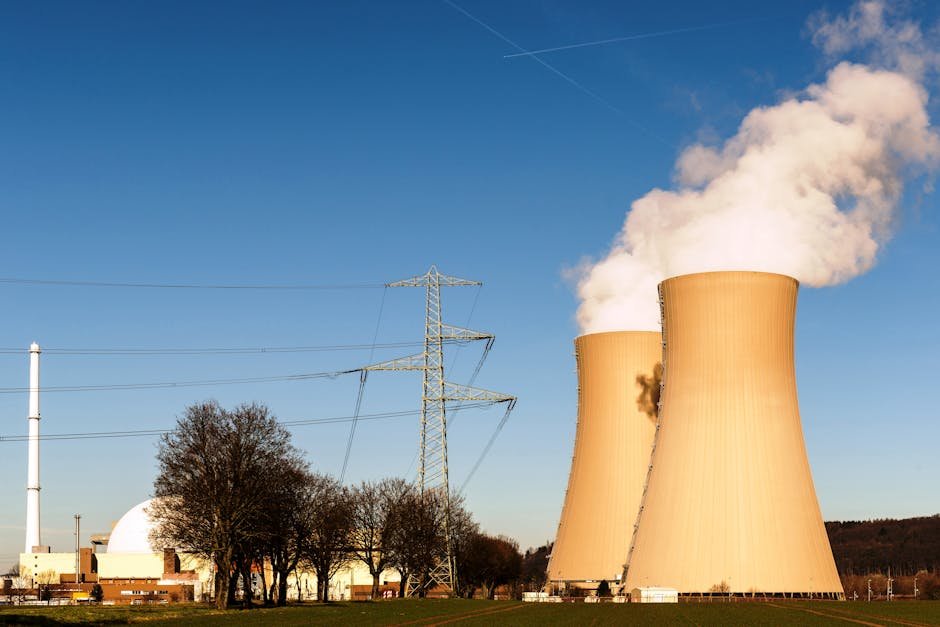
Russia locked down a $16.5 billion deal to build Kazakhstan’s first nuclear power plant, expanding Moscow’s energy grip on Central Asia while Washington watches from the sidelines.
Vladimir Putin and Kazakh President Kassym-Jomart Tokayev signed the agreement during Putin’s state visit to Astana, marking Russia’s largest infrastructure project in the former Soviet republic. The deal positions Russia’s state nuclear company Rosatom to construct a multi-reactor facility that will reshape the energy landscape of America’s fifth-largest uranium supplier.
The timing matters. Kazakhstan sits on 12 percent of the world’s uranium reserves and supplied roughly 25 percent of the uranium used in American nuclear reactors last year. While the deal doesn’t directly affect current uranium exports, it ties Kazakhstan’s energy future closer to Moscow at a moment when Western nations are scrambling to reduce dependence on Russian nuclear technology and fuel services.
Rosatom already controls about 40 percent of global uranium enrichment capacity and provides fuel or technology to nuclear plants across Europe and Asia. This Kazakhstan project extends that reach into a country the United States has courted as a potential alternative to Russian energy dominance in the region.
The nuclear plant will be built on the shores of Lake Balkhash in eastern Kazakhstan, using Russian VVER reactor technology. Construction timeline and specific capacity weren’t disclosed in initial reports, but similar Rosatom projects typically take eight to ten years from groundbreaking to operation.
For American policymakers, the deal represents another front where Russia is outmaneuvering Western influence in strategically important territories. Kazakhstan borders both Russia and China, controls critical transportation corridors between Europe and Asia, and holds natural resources essential to everything from nuclear power to electric vehicle batteries.
The Biden administration spent years trying to build alternative nuclear fuel supply chains that bypass Russia, including investments in domestic enrichment capacity and partnerships with allied nations. This Kazakhstan agreement shows how Russia continues to leverage decades-old relationships and technological advantages to maintain its energy foothold, even as Western sanctions target other sectors of its economy.
Congressional Republicans have repeatedly warned that American retreat from Central Asian engagement creates openings for Russian and Chinese expansion. This nuclear deal appears to validate those concerns, locking in Russian influence over Kazakhstan’s power grid for generations while American companies remain largely absent from the region’s major infrastructure projects.
Key Points
- Russia signed a $16.5 billion deal to build Kazakhstan’s first nuclear power plant, expanding Moscow’s energy dominance in Central Asia
- Kazakhstan supplies roughly 25 percent of uranium used in American nuclear reactors and holds 12 percent of global uranium reserves
- The agreement demonstrates Russia’s continued ability to outmaneuver Western influence in strategically critical regions despite sanctions
https://www.foxnews.com/world/putin-lands-165b-nuclear-win-russias-doorstep-massive-kazakhstan-pact-reports – May 28, 2026