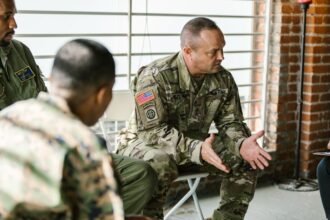

The Canadian-led NATO brigade stationed in Latvia has evolved from a symbolic “tripwire” force into a combat-ready fighting unit capable of defending Baltic territory against Russian aggression, according to the brigade’s commander.
The multinational force, which includes troops from nine NATO allies, now operates as a fully functional brigade with enhanced firepower, integrated logistics, and the ability to conduct sustained defensive operations along NATO’s eastern flank. The shift marks a significant change from the unit’s original 2017 mission, which was primarily designed to signal NATO commitment rather than mount a credible defense.
“We are no longer just a symbol,” the commander told reporters this week. “We have the combat power, the sustainability, and the command structure to defend this territory.”
The transformation reflects NATO’s broader response to Russian military threats following Moscow’s invasion of Ukraine. What began as four small battalion-sized battle groups in the Baltics and Poland has grown into a network of brigade-level formations backed by pre-positioned equipment, dedicated supply lines, and rehearsed reinforcement plans.
Latvia sits less than 400 miles from St. Petersburg and shares a 135-mile border with Russia. The Baltic nation, home to 1.9 million people, would be impossible to defend without immediate allied support in the event of Russian attack. NATO war games have repeatedly shown that Russian forces could reach the Baltic capitals within 60 hours of conflict onset.
The Canadian-led brigade now numbers several thousand troops and includes artillery batteries, engineering units, and logistics elements that were absent during the initial deployment. Allied nations including Spain, Italy, and Poland contribute rotational forces, while the United States provides intelligence and air defense support.
Still, questions remain about NATO’s readiness to defend the Baltics against a determined Russian assault. The alliance continues to face challenges moving heavy equipment across Europe, and political will to defend small Baltic allies remains untested beyond treaty commitments.
For American taxpayers who fund roughly 70 percent of NATO’s military capability, the Latvia deployment represents part of a larger investment in European defense. The United States maintains roughly 100,000 troops across Europe, including rotating units in Poland and the Baltics, permanent bases in Germany, and naval forces in Spain and Italy.
The brigade commander said NATO forces now conduct regular exercises with Latvian troops and have established deep relationships with local communities. Whether that preparation would prove sufficient in actual war remains the ultimate question for an alliance that has never fought a major conventional conflict.
Key Points
- Canadian-led NATO brigade in Latvia has evolved from symbolic “tripwire” to combat-capable fighting force with artillery, logistics, and sustained defensive capability
- Force defends Baltic territory 400 miles from St. Petersburg along 135-mile Russian border, where war games show Moscow could reach capitals in 60 hours
- American taxpayers fund 70 percent of NATO military capability, with U.S. maintaining 100,000 troops across Europe including rotational Baltic forces
https://www.defensenews.com/global/europe/2026/05/15/canada-led-brigade-in-latvia-moves-beyond-tripwire-role-commander-says/ – May 15, 2026