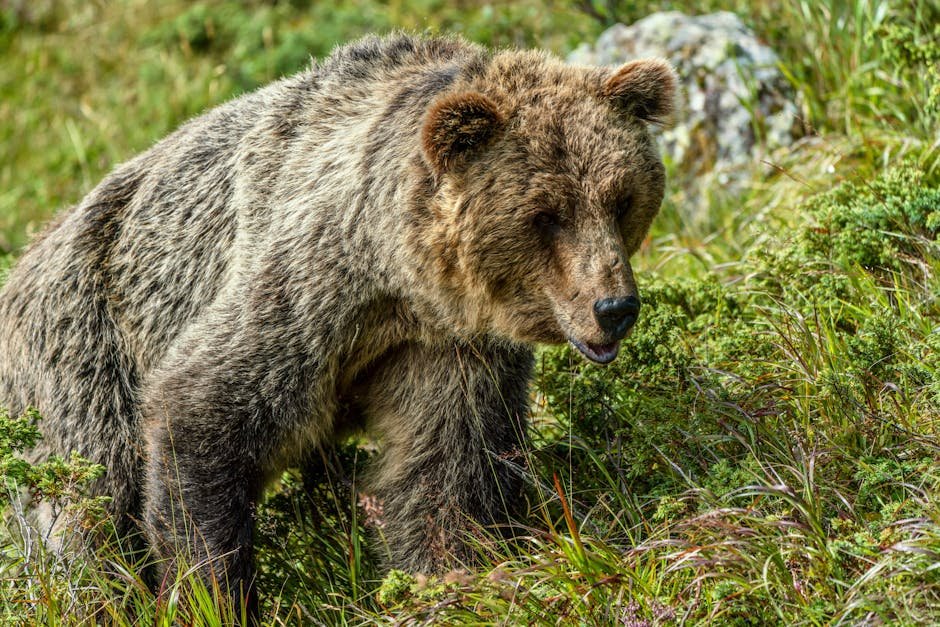
CODY, WY — The U.S. Fish and Wildlife Service is moving toward removing grizzly bears from Endangered Species Act protection in the Greater Yellowstone Ecosystem, reigniting a decades-old battle that puts ranchers’ livelihoods directly against conservationists’ hard-won recovery success.
The grizzly population in the region has rebounded from roughly 140 bears in 1975 to an estimated 1,000 today — a conservation triumph by any measure. Federal officials argue the bears have met every recovery target, making continued ESA listing unnecessary. Several Western states are preparing management plans that would include limited hunting seasons.
For ranching families around Yellowstone, the numbers tell a different story. Grizzly-caused livestock losses have climbed steadily as bear numbers grow and their range expands into traditional ranching country. Tom Halverson, who runs cattle near Dubois, lost four calves to grizzlies last spring. “We’re not against bears existing,” he says. “But when you can’t protect your herd on your own land, and the government tells you that’s just the cost of conservation, something’s broken.”
The conflict runs deeper than livestock losses. Ranchers describe a regulatory maze where killing a grizzly in defense of property can trigger federal prosecution, while compensation programs rarely cover actual economic damage. Some families have abandoned traditional grazing allotments because bear encounters made the land unworkable.
Environmental groups see delisting as premature and dangerous. They point to habitat fragmentation, declining whitebark pine (a key food source), and genetic isolation concerns. Previous delisting attempts in 2007 and 2017 were reversed by federal courts after conservation groups sued, arguing the government failed to ensure long-term population viability.
“This isn’t about ranchers versus bears,” says Andrea Santarsiere of the Center for Biological Diversity. “It’s about whether we maintain the protections that brought grizzlies back from the brink. State management means hunting seasons, and we’ve seen what happens when politics drives wildlife policy.”
That’s exactly what ranchers want to hear less of — urban environmentalists dictating wildlife management in rural communities. They argue state agencies understand local conditions better than federal bureaucrats or coastal advocacy groups. Wyoming, Montana, and Idaho have all developed management frameworks that would allow hunting while maintaining sustainable populations.
The delisting decision expected later this year will determine whether recovered species can transition from federal protection to state management, or whether ESA listings become permanent regardless of recovery success. For ranching communities, it’s about whether conservation means coexistence or simply accepting mounting losses while others claim victory.
Key Points
- Grizzly population has grown from 140 to 1,000 bears since ESA listing, meeting all federal recovery targets
- Ranchers face increasing livestock losses and restricted land use as bear range expands, with inadequate compensation
- Environmental groups plan legal challenges to any delisting, arguing habitat threats and questioning state management capacity
Aporia News – May 07, 2026