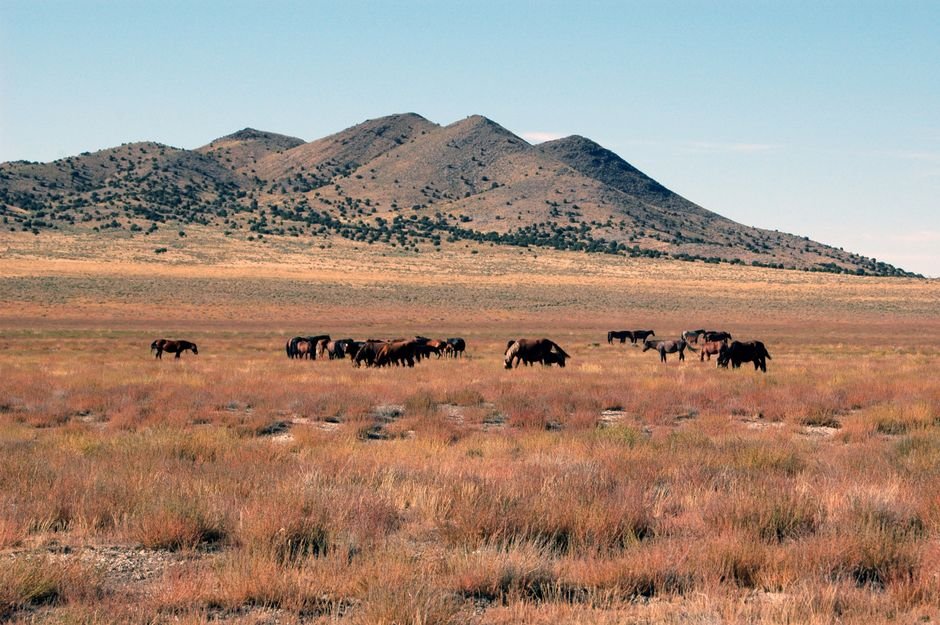
More than 82,000 wild horses and burros now roam across 177 million acres of federal land in the West — nearly triple the number the Bureau of Land Management says these ranges can sustainably support. The explosion in populations has ranchers, wildlife managers, and conservation groups all pointing fingers over who’s responsible for degraded rangeland and what to do about it.
At the center of the controversy: a 1971 federal law protecting wild horses as “living symbols of the historic pioneer spirit of the West,” combined with adoption programs that can’t keep pace with reproduction rates and political pressure that makes large-scale removals nearly impossible.
Why Ranchers Say Their Cattle Are Being Blamed
Livestock producers with federal grazing permits argue they’re being squeezed off public lands while protected horse herds destroy the same habitat. In Nevada, where two-thirds of America’s wild horses graze, ranchers have seen their permitted cattle numbers cut by 30% over the past two decades while horse populations doubled.
“We’re regulated down to the individual cow, with strict limits on when and where we can graze,” says Montana rancher Tom Westfield. “Meanwhile, horses eat year-round with no management at all. Then when the range is hammered, guess who gets blamed?”
Each horse consumes roughly the same forage as five sheep or one cow, but unlike permitted livestock, wild horses don’t rotate off degraded areas. Water sources that once served both wildlife and cattle now get trampled into mud pits.
The Wildlife and Habitat Costs
Wildlife biologists increasingly warn that overpopulated horse herds threaten native species. Sage grouse habitat, already under pressure from development, suffers additional damage from year-round horse grazing. Pronghorn antelope compete for forage. Desert bighorn sheep lose access to water sources.
The BLM itself acknowledges the problem, stating that current populations are causing “a deterioration of the range.” Yet removing horses sparks immediate lawsuits from protection groups who oppose roundups and argue for fertility control instead — a solution critics say can’t work at scale.
What’s at Stake for Rural Communities
The impasse leaves federal land managers paralyzed between opposing camps while rangeland quality declines. Ranchers see their grazing rights eroded by problems they didn’t create. Hunters watch wildlife habitat degrade. And wild horse advocates accuse the government of betraying the 1971 protection mandate.
Without resolution, the West faces more of what’s already happening: reduced cattle permits, degraded wildlife habitat, and wild horse herds slowly starving on overgrazed range — an outcome nobody actually wants.
Key Points
- Wild horse populations now triple BLM’s sustainable target of 27,000 animals
- Ranchers face permit cuts while protected horse herds graze year-round without limits
- Wildlife habitat suffers as federal managers face lawsuits from both removal opponents and rangeland advocates
Aporia News – August 14, 2026