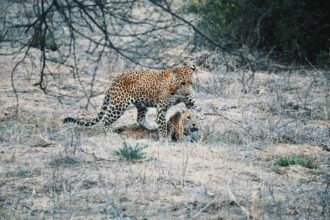

Mountain lion sightings near homes, schools, and livestock pastures have surged across the West, forcing wildlife managers to walk a tightrope between conservation success and public safety. What was once a rare glimpse of wilderness has become, in some communities, an almost monthly occurrence—and the tension between protecting a recovered predator and protecting rural families is reaching a breaking point.
Colorado’s mountain lion population now exceeds 4,500 animals, triple the estimate from the 1970s when the species was considered threatened. Similar rebounds have occurred across Montana, Wyoming, and Idaho. Wildlife officials call it a conservation triumph. Ranchers burying calves and parents keeping kids indoors at dusk call it something else entirely.
Pet Kills and Playground Closures Spark Debate
In rural Montana, a mountain lion killed three dogs in residential yards over two weeks this summer before state trappers removed the animal. A Colorado Springs elementary school went into lockdown twice in May after a lion was spotted on the playground. Utah ranchers report losing $2.3 million in livestock to lion predation last year, with reimbursement programs covering less than half the losses.
Conservation groups argue these incidents, while alarming, remain statistically rare and that removing more lions would reverse decades of careful population recovery. “We have more people living in lion habitat than ever before,” says Western Wildlife Alliance director Sarah Chen. “The real issue is development, not overpopulation.”
Hunting Quotas Become Political Flashpoint
State wildlife agencies face pressure from both directions. Colorado recently reduced lion hunting quotas by 15%, citing population modeling that suggests female harvest rates may be too high in certain units. The decision infuriated hunters and ranchers who argue the state is prioritizing predators over people and livestock.
Meanwhile, ballot initiatives to ban mountain lion hunting entirely have gained traction in Oregon and Washington, funded largely by urban voters who view trophy hunting as barbaric. Rural communities see these efforts as city dwellers imposing values on landscapes they don’t live in.
What’s at Stake for Rural America
The broader question is who controls wildlife management—professional biologists balancing complex data, or voters swayed by emotional appeals. For ranching families, the answer determines whether they can safely let children play outside, whether their livestock operation remains viable, and whether their knowledge of the land counts for anything in conservation decisions increasingly made in conference rooms hundreds of miles away.
Key Points
- Mountain lion populations have tripled since the 1970s across the West, leading to increased encounters near homes and schools
- Ranchers face $2.3 million annually in livestock losses while reimbursement programs cover less than half the damage
- Urban-backed ballot initiatives to ban lion hunting threaten to remove wildlife management from professional biologists and rural stakeholders
Aporia News – September 11, 2026