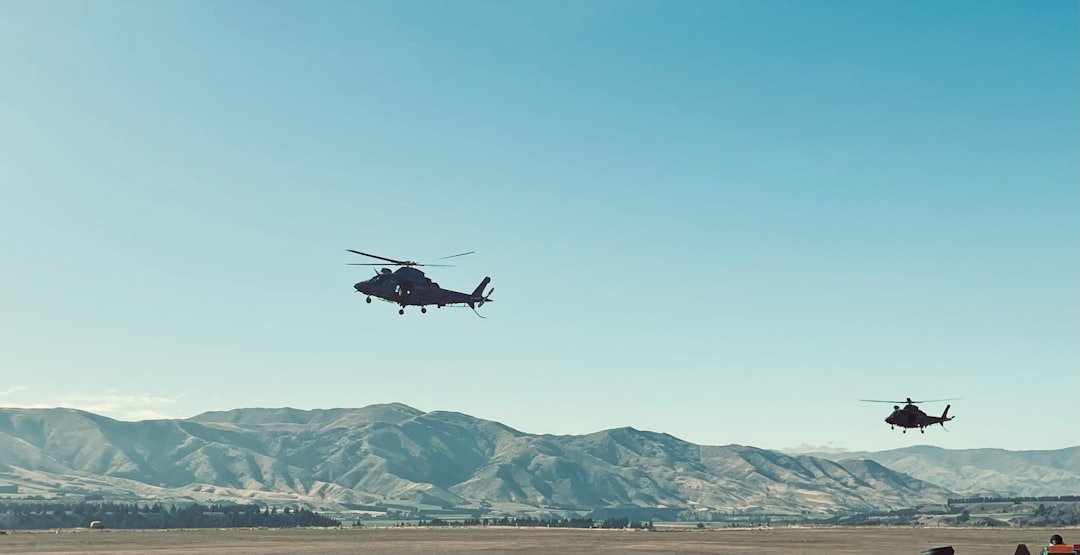
The Marine Corps is turning its helicopters into flying drone command centers, a shift that could reshape how America projects power in the Pacific and other contested regions where fixed bases face missile threats.
Recent tests put command-and-control equipment aboard Marine helicopters, allowing them to direct multiple unmanned systems while airborne. The approach solves a critical vulnerability: in a conflict with China or another peer adversary, ground-based drone control stations become sitting targets for precision strikes.
By mounting control systems on aircraft like the MV-22 Osprey or CH-53K heavy-lift helicopter, Marines gain the ability to orchestrate drone swarms from mobile platforms that can reposition quickly. The aircraft become both transport and tactical command post, directing surveillance drones, loitering munitions, and other unmanned assets across a battlefield.
This matters because the next major conflict won’t look like Iraq or Afghanistan. China’s military can strike fixed positions across vast distances with ballistic and cruise missiles. American forces need to stay mobile or risk destruction before the fight even starts. A helicopter-based command center can lift off, direct operations from the air, and land somewhere new before the enemy targets its last location.
The testing aligns with the Marine Corps’ Force Design 2030 initiative, which assumes that island bases and large ships in the Western Pacific will face constant threat. Rather than concentrating forces in vulnerable installations, the Corps is spreading out into smaller, more agile units that can operate independently and relocate rapidly.
Helicopter-mounted drone control extends that philosophy into the air. A small team aboard a single aircraft can manage a network of unmanned systems conducting reconnaissance, jamming enemy communications, or striking targets—all without requiring a permanent base or large support infrastructure on the ground.
The technology also addresses another reality: modern warfare moves fast. Sending targeting data and commands through multiple layers of command takes time. When the helicopter crew controls the drones directly, they can respond to threats and opportunities in minutes rather than hours.
The Marine Corps has not disclosed which aircraft received the command equipment during testing or when the capability might enter regular service. What’s clear is that America’s expeditionary force is betting its future on mobility, dispersion, and the ability to fight without fixed bases—exactly the kind of warfare China fears most.
Key Points
- Marine helicopters tested with equipment to command multiple drones while airborne, eliminating need for fixed control stations vulnerable to enemy missiles
- Mobile aerial command posts fit the Corps’ strategy for Pacific conflict, where Chinese precision strikes threaten permanent bases
- Technology enables small helicopter crews to direct drone reconnaissance and strikes in real time without routing through multiple command layers
https://www.defensenews.com/news/your-marine-corps/2026/05/22/us-marine-corps-tests-using-helicopter-as-mobile-drone-command-center/ – May 22, 2026