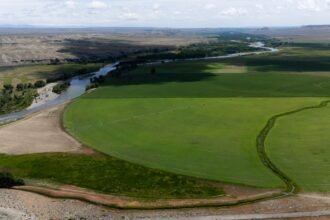
The Klamath Basin stands as ground zero for a conflict that’s spreading across the American West: who gets the water when there isn’t enough for everyone? Federal agencies say threatened salmon and suckerfish need minimum stream flows to survive. Farmers say their century-old water rights and family operations are being sacrificed for fish that may never recover anyway.
In Oregon and California’s Klamath Basin, the Bureau of Reclamation cut irrigation water to farmers by 75% last year to maintain flows for endangered coho salmon. Over 200,000 acres went unplanted. Similar battles are erupting in Idaho’s Snake River basin, Montana’s Yellowstone tributaries, and California’s Central Valley—anywhere irrigation competes with listed species.
The conservation case is straightforward: salmon populations have crashed to historic lows, some runs down 95% from a century ago. Federal law requires agencies to prevent extinction, even if that means restricting water use. Biologists argue that without adequate stream flows and cooler water temperatures, these fish populations will cross a threshold from which no recovery is possible. The economic value of restored salmon runs—commercial fishing, tribal harvest rights, sport fishing tourism—could exceed what’s lost in reduced agriculture.
But farmers counter that they’re being asked to bear impossible costs for uncertain benefits. Their water rights predate the Endangered Species Act by decades. Many are third or fourth-generation operations that invested millions in infrastructure based on reliable water access. When irrigation gets cut, it’s not just one year’s crop—orchards die, equipment sits idle, workers lose jobs, and small towns collapse. They point out that dams, ocean conditions, and predation by sea lions also affect salmon, yet only agriculture takes the hit.
The legal framework creates a zero-sum game. Senior water rights usually protect the oldest agricultural claims, but the ESA can override state water law entirely. Federal judges have sided with fish in most cases, but each ruling spawns new resentment in rural communities that see this as Washington DC choosing fish over farm families.
Some compromise attempts show promise—water banks that pay farmers to lease rights for fish flows, modernized irrigation that uses less water, habitat restoration that helps salmon survive in lower flows. But these require funding and cooperation that’s hard to sustain when both sides feel existential stakes.
What’s at stake goes beyond any single basin. Across the West, agricultural communities that survived drought and depression are facing a new threat: federal power to reallocate water based on species protection. Whether that’s conservation necessity or government overreach may depend on which side of the headgate you stand.
Key Points
- Bureau of Reclamation has cut irrigation by up to 75% in Western basins to maintain flows for endangered salmon and suckerfish
- Farmers argue their pre-ESA water rights are being overridden to save species while other factors like dams and predation go unaddressed
- The conflict exposes fundamental tensions between federal species protection laws and state-based water rights that underpin rural economies
Aporia News – May 24, 2026