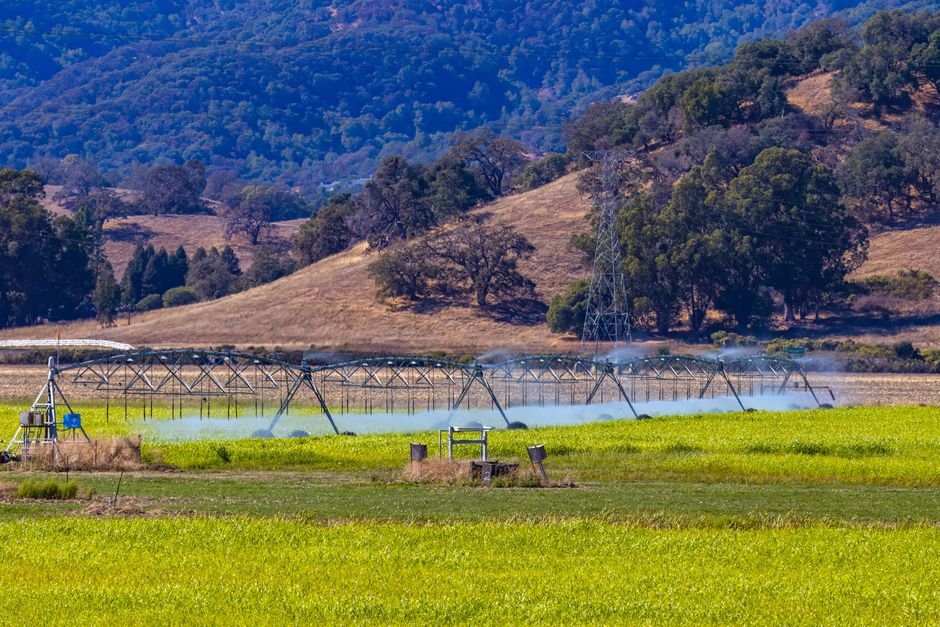
The Klamath Basin sits at ground zero of America’s most bitter water wars. For the fourth consecutive year, federal regulators have ordered California and Oregon farmers to sharply reduce irrigation water during drought conditions—not to save drinking water for cities, but to maintain minimum flows for endangered suckerfish and threatened coho salmon.
The September 8th curtailment order affects 1,400 agricultural water users across 200,000 acres of some of the most productive farmland in the West. Meanwhile, several ranching families have already sold out after three years of similar restrictions that left fields brown and cattle herds culled by half.
The Conservation Case for Fish Flows
Federal wildlife officials say they have no choice. The Lost River sucker and shortnose sucker—both listed under the Endangered Species Act—require cold water flows to survive spawning season. Coho salmon populations in the Klamath River have crashed to less than 1% of historical numbers, threatening both the species and the treaty fishing rights of four Native American tribes.
Biologists point to 2002, when over 70,000 adult salmon died in the lower Klamath during a drought year when too much water went to farms. Environmental groups argue that decades of over-allocation created an unsustainable system where paper water rights exceed actual water availability by 30% in dry years.
What Farmers and Ranchers Say They’re Losing
Local irrigators see their century-old water rights being sacrificed for fish species that may or may not recover regardless of water allocation. “My grandfather filed this water right in 1911,” said one fourth-generation rancher who asked not to be named. “Now they’re telling me a sucker that nobody ever heard of until 1988 has more right to this water than my family does.”
The economic impact extends beyond individual farms. Klamath Falls has lost 2,300 jobs since 2020. Feed stores, equipment dealers, and processing facilities have closed. Local officials estimate $450 million in economic losses across the basin since water restrictions intensified.
The Bigger Fight Over Western Water
The Klamath conflict previews what’s coming across the West as climate change reduces snowpack while the Endangered Species Act protects more fish species. Similar battles are brewing over Rio Grande silvery minnows in New Mexico, delta smelt in California’s Central Valley, and bull trout in Montana.
At stake is whether Western water law—built on “first in time, first in right”—can survive federal environmental mandates that treat water as a public trust resource. For farming communities, it’s about whether rural America’s food production will be systematically dismantled to chase species recovery targets that may be unachievable regardless of sacrifice.
Key Points
- Federal regulators cut water to 200,000 acres of California and Oregon farmland to maintain flows for endangered fish species
- Klamath Basin has lost 2,300 jobs and $450 million since water restrictions intensified in 2020
- The conflict tests whether century-old water rights can survive Endangered Species Act mandates across the drought-stricken West
Aporia News – September 12, 2026