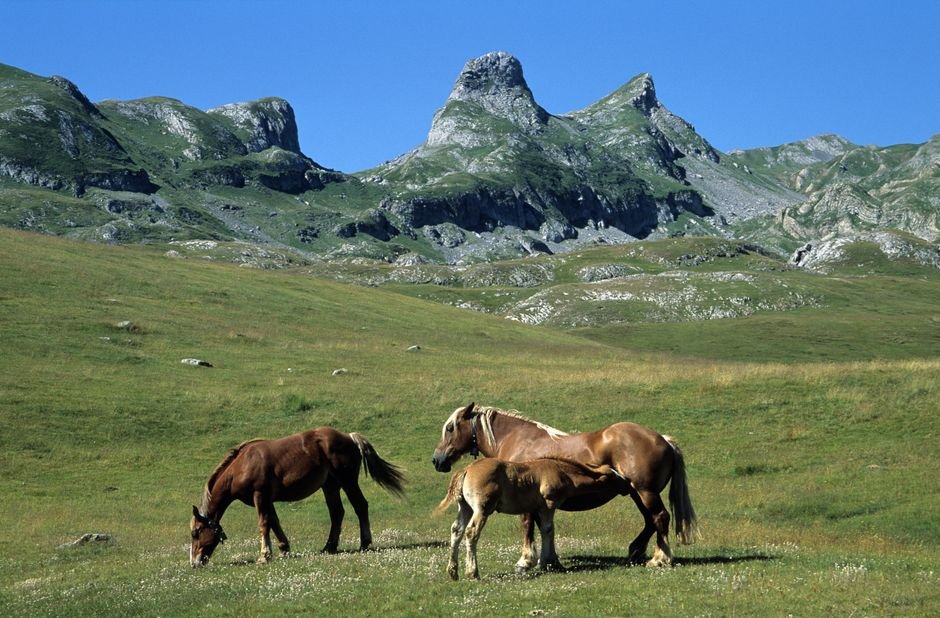
The Bureau of Land Management estimates nearly 82,000 wild horses and burros now roam public lands across ten Western states — more than triple what range scientists say the land can sustain without degradation. Meanwhile, ranchers who lease the same federal grazing lands are watching their permitted cattle numbers slashed while protected horse populations explode.
The Wild Free-Roaming Horses and Burros Act of 1971 gave these animals federal protection, but a half-century later, the management crisis has become a flashpoint between animal advocacy groups and rural communities who depend on healthy rangelands for their livelihoods.
The Range Science Behind Population Limits
BLM biologists set “appropriate management levels” based on forage availability, water sources, and ecosystem health. For most Western ranges, that target is roughly 27,000 horses and burros. The current population of 82,000 means severe overgrazing in many herd management areas, particularly across Nevada, Wyoming, and Oregon.
Wildlife advocates point to damaged riparian zones where wild horses have stripped vegetation to bare ground, impacting everything from sage grouse nesting habitat to trout streams. Native wildlife species never evolved alongside large herds of feral horses, and the ecological consequences show in degraded watersheds and displaced bighorn sheep populations.
Why Ranchers See a Double Standard
The tension explodes over who gets cut when the range is overgrazed. Ranchers leasing federal grazing allotments have seen their permitted livestock numbers reduced by 30-50% in some districts, while wild horse populations continue climbing. A rancher pays roughly $1.35 per animal unit month to graze cattle; wild horses graze for free under federal protection.
Western livestock associations argue they’re being blamed for range damage caused primarily by unchecked horse populations. When ranchers exceed their permitted numbers, they face fines and allotment reductions. When horse populations triple their targets, BLM struggles to gather excess animals due to budget constraints and public opposition to removals.
The Adoption and Holding Crisis
BLM has removed tens of thousands of horses from overgrazed ranges, but adoptions can’t keep pace. More than 60,000 wild horses now live in government holding facilities at a long-term cost exceeding $50,000 per horse over its lifetime. That’s taxpayer money flowing to manage an ecological problem while ranchers absorb cuts to their grazing permits.
What’s at stake is whether Western rangelands can sustain both traditional livestock operations and growing wild horse herds — or whether one gives way while the land itself suffers the consequences.
Key Points
- Wild horse populations at 82,000 animals exceed sustainable range capacity by more than 55,000 head
- Ranchers face 30-50% grazing cuts while protected horse herds grow unchecked on same federal lands
- Over 60,000 removed horses in government holding facilities cost taxpayers billions in long-term care
Aporia News – September 14, 2026