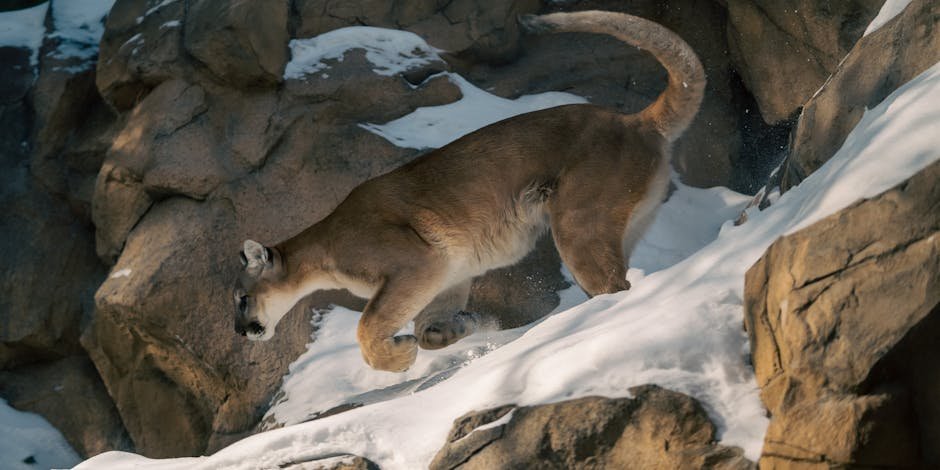
Mountain lion populations across the American West have rebounded dramatically over the past three decades—a conservation success story that’s now pitting state wildlife agencies against ranching communities who say they’re bearing the costs of that recovery in dead livestock, threatened pets, and genuine fear for their children’s safety.
Colorado’s Parks and Wildlife estimates the state now harbors between 3,800 and 4,400 mountain lions, up from perhaps 2,000 in the 1990s. Similar increases have occurred across Montana, Wyoming, and Idaho. Wildlife biologists celebrate the recovery of an apex predator once hunted to near-extinction in much of its historic range.
But in rural communities, the mood is far from celebratory. Ranchers report increasing livestock losses—calves, sheep, and even horses taken by lions that have lost their fear of human presence. In subdivisions pushing into traditional lion habitat, encounters have become common enough that some parents won’t let children play outside unsupervised.
“We’ve documented over forty cattle kills on ranches in this county alone in the past two years,” says Fremont County, Colorado rancher Tom Hastings. “That’s real money out of real people’s pockets. Meanwhile, we’re told we can’t defend our herds because the lions are too valuable.”
Conservation advocates counter that most livestock losses result from poor husbandry practices—unfenced calving areas, attracting prey species near ranches, leaving carcasses exposed. They argue that mountain lions play an essential role controlling deer and elk populations that would otherwise overgraze rangeland.
The flashpoint is hunting quota systems. Most Western states allow controlled mountain lion hunting, but environmental groups push constantly for lower quotas while rural communities demand liberalization. Montana reduced its mountain lion harvest quota by 40% in Region 2 last year after conservation lawsuits—a decision ranchers say ignores their legitimate safety concerns.
“Nobody’s talking about exterminating mountain lions,” says Wyoming State Representative Brad Morrison. “We’re talking about managing them at sustainable levels that don’t turn ranching into a blood sport or make parents afraid to let their kids walk to the school bus.”
Wildlife officials find themselves squeezed between competing values—maintaining healthy predator populations while addressing legitimate public safety concerns. Recent non-fatal attacks on hikers in California and a fatal attack on a Colorado trail runner in 2024 have intensified the debate beyond just ranching interests.
What’s clear is that successful predator recovery creates real conflicts that simple slogans can’t resolve. The question isn’t whether mountain lions belong on the landscape—it’s who pays the price for their presence, and whether that burden is being shared fairly.
Key Points
- Mountain lion populations have doubled or tripled across much of the West since the 1990s, creating increased livestock predation and human encounters
- Rural communities demand higher hunting quotas while conservation groups push for greater restrictions, leaving state wildlife agencies caught between competing values
- The debate extends beyond ranching economics to genuine public safety concerns after several attacks, forcing difficult questions about who bears the costs of predator recovery
Aporia News – May 16, 2026